
Roof Damage Risks Unique to Oakwood & Surrounding Areas
Homeowners in Oakwood, GA enjoy everything that comes with living in North Georgia, from beautiful wooded neighborhoods to easy access to Lake Lanier. However, the local climate and environment also create several challenges for residential roofing systems.
Heat, humidity, thunderstorms, wind, heavy rainfall, and nearby trees can all contribute to roof deterioration. Understanding these risks can help Oakwood homeowners identify problems earlier and take preventative steps before minor damage becomes an expensive repair.
Here are some of the most important roof damage risks homeowners in Oakwood and surrounding communities should watch for.
Strong Thunderstorms and High Winds
North Georgia regularly experiences thunderstorms capable of producing strong wind gusts. Your roof is the first line of defense against these conditions.
Wind can lift or loosen asphalt shingles, especially when shingles are already aging or their seals have weakened. In stronger storms, shingles may be completely removed from the roof.
The damage isn't always obvious. A shingle can lift during a storm and settle back into place afterward while still having a compromised seal.
After significant storms, homeowners should visually inspect their roofs from the ground and schedule a professional inspection if they suspect damage.
Heavy Rain and Roof Leaks
Oakwood receives substantial rainfall throughout the year, making effective roof drainage particularly important.
A healthy roofing system should direct water into gutters and away from the home. Problems develop when shingles, flashing, underlayment, gutters, or other roofing components are damaged.
Heavy rain can expose weaknesses that may not be noticeable during dry weather.
Pay attention to water stains on ceilings, damp attic insulation, peeling paint, musty odors, or moisture around chimneys and roof penetrations. These can all indicate that water is entering the roofing system.
Tree and Branch Damage
Many properties throughout Oakwood and Hall County are surrounded by mature trees.
Trees provide shade and contribute to the area's appearance, but they can also create roofing hazards.
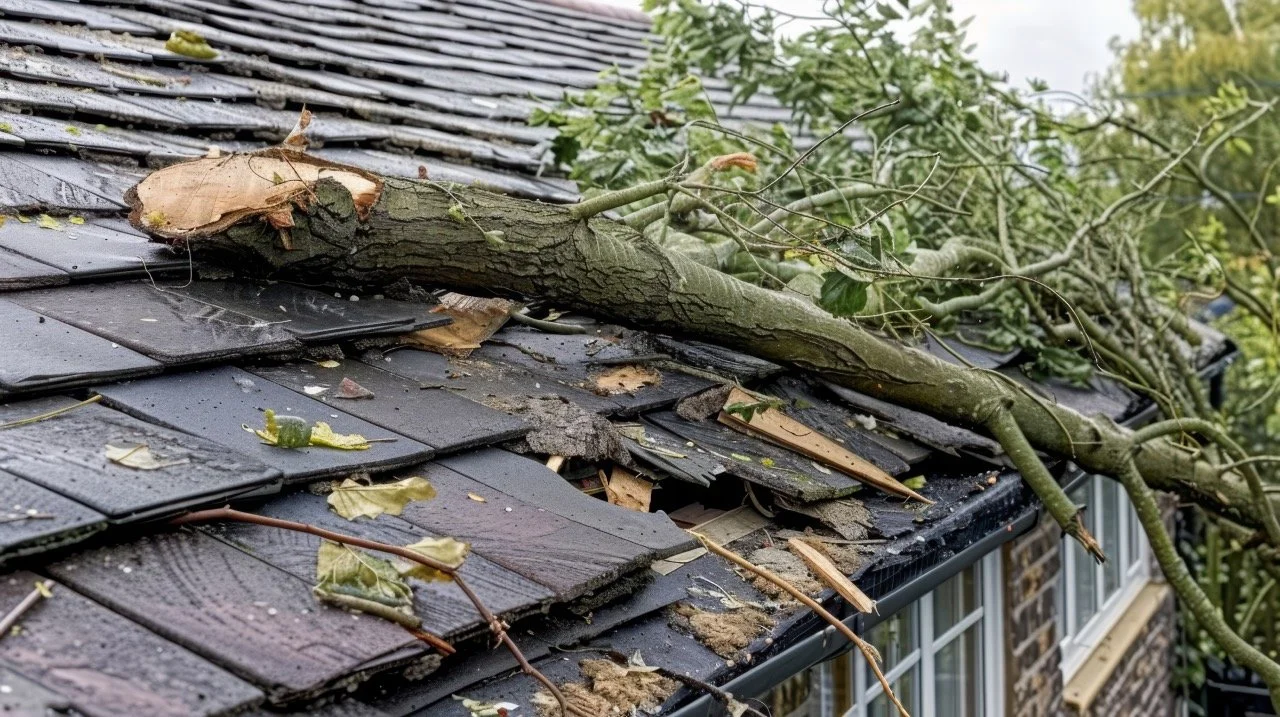
Large branches can break during thunderstorms and fall onto the roof, potentially damaging shingles, decking, gutters, and structural components. Smaller branches that repeatedly scrape across the roof can gradually remove protective granules from asphalt shingles.
Trees also deposit leaves, pine needles, and other organic debris onto roofs and into gutters.
Trim branches that hang directly above or touch your roof and remove accumulated debris regularly.
Clogged Gutters and Drainage Problems
Leaves and pine needles can quickly clog gutters, particularly on wooded properties.
When gutters cannot drain properly, rainwater may overflow or back up near the edge of the roof. Over time, moisture can contribute to deterioration of fascia boards, soffits, decking, and siding.
Overflowing gutters can also deposit excessive water near the home's foundation.
Oakwood homeowners should clean their gutters regularly, particularly during fall and after major storms.
Heat and UV Exposure
Storms aren't the only threat to your roof.
Georgia's hot summers expose roofing materials to prolonged heat and intense sunlight. Roof surfaces can reach temperatures significantly higher than the surrounding air.
Over many years, repeated heat exposure can contribute to aging, cracking, curling, and granule loss on asphalt shingles.
Proper attic ventilation is also important. Excessive attic heat can place additional stress on the roofing system while potentially increasing cooling demands inside the home.
High Humidity and Moisture
North Georgia's humid climate can create roofing and attic moisture problems.
Poor attic ventilation may allow moisture to accumulate, potentially contributing to mold, damaged insulation, and deterioration of wooden components.
Shaded roof sections can also remain damp longer after rainfall, especially when surrounded by trees.
These conditions may encourage moss, algae, or other organic growth.
If you notice dark streaking or significant growth across your roof, have the area evaluated rather than using aggressive pressure washing, which can damage asphalt shingles.
Flashing Damage Around Roof Penetrations
Roof penetrations and transitions are some of the most vulnerable areas of any roofing system.
Common examples include chimneys, skylights, plumbing vents, exhaust vents, and roof-to-wall intersections.
These areas typically rely on flashing and sealants to prevent water intrusion.
Temperature changes, storms, aging materials, and previous repairs can cause flashing or sealants to deteriorate. Once small openings develop, heavy North Georgia rain can find its way underneath the roofing materials.
Professional roof inspections should include careful evaluation of these vulnerable areas.
Hail and Impact Damage
North Georgia thunderstorms can occasionally produce hail capable of damaging roofing materials.
The extent of damage depends on factors such as hail size, wind speed, roofing material, roof age, and the direction of the storm.
Hail damage isn't always visible from your yard. Asphalt shingles can suffer impact damage that compromises their protective surface without creating an obvious hole.
If your Oakwood neighborhood experiences a significant hailstorm, consider having the roof professionally inspected.
Aging Roofing Systems
Sometimes the biggest risk isn't a single storm—it's the accumulated effects of years of exposure.
Older roofs may be less capable of handling wind, rain, heat, and falling debris than newer systems. Shingles can lose granules, seals can weaken, flashing can deteriorate, and previous repairs may begin to fail.
Recurring leaks, widespread shingle deterioration, or increasingly frequent repairs may indicate that roof replacement should be considered.
Protect Your Oakwood Home With Preventative Roof Maintenance
You can't control North Georgia weather, but you can make sure your roof is prepared for it.
Keep gutters clear, trim nearby branches, check your attic for moisture, visually inspect the roof after severe storms, and address leaks promptly.
Professional inspections can also identify problems that aren't visible from the ground.
Mr. Roof and Restoration provides roof inspections, roof repairs, roof replacements, and storm damage restoration in Oakwood and surrounding North Georgia communities.