
How Do North Georgia Homeowners Secure Approval for Roofing Insurance Claims?
When water breaches the roof system, the evidence is rarely confined to the shingles; it manifests as a direct violation of the home’s interior. A deep, spreading water stain across a ceiling and down a wall surface signals that the protective layers of the structure have already failed. This is the moment critical loss occurs, as trapped water permeates the insulation and begins degrading the structural drywall. Property owners in North Georgia who observe this scenario (seen below) must act, understanding that the visual stain is merely the tip of a larger water intrusion problem.
For an adjuster to validly approve a storm damage claim, they require a precise and objective diagnosis that links this visible interior effect back to a verifiable external storm event. This is why a complete roof inspection is the only reliable way to establish that undeniable physical evidence and bridge the gap between initial loss and necessary coverage authorization.
Why Is Accurate Damage Documentation Essential for Claim Validation?
Adjusters rely on verifiable physical evidence to justify payout amounts. A visual check from the ground rarely reveals the full scope of structural vulnerability. Wind uplift can loosen fasteners beneath the surface, while hail impacts crack the underlying matting without leaving immediate surface holes. Missing these subtle signs during the initial submission limits the total funds released for repairs.
Detailed records remove ambiguity from the carrier's assessment. An on-site roof report outlines each point of vulnerability, combining high-resolution imagery with precise technical analysis. Presenting an itemized account forces the insurer to address every affected area rather than offering a minimal payout. This direct approach protects the structural integrity of the dwelling while verifying that the carrier fulfills its policy obligations.
What Key Items Form the Essential Insurance Approval Checklist?
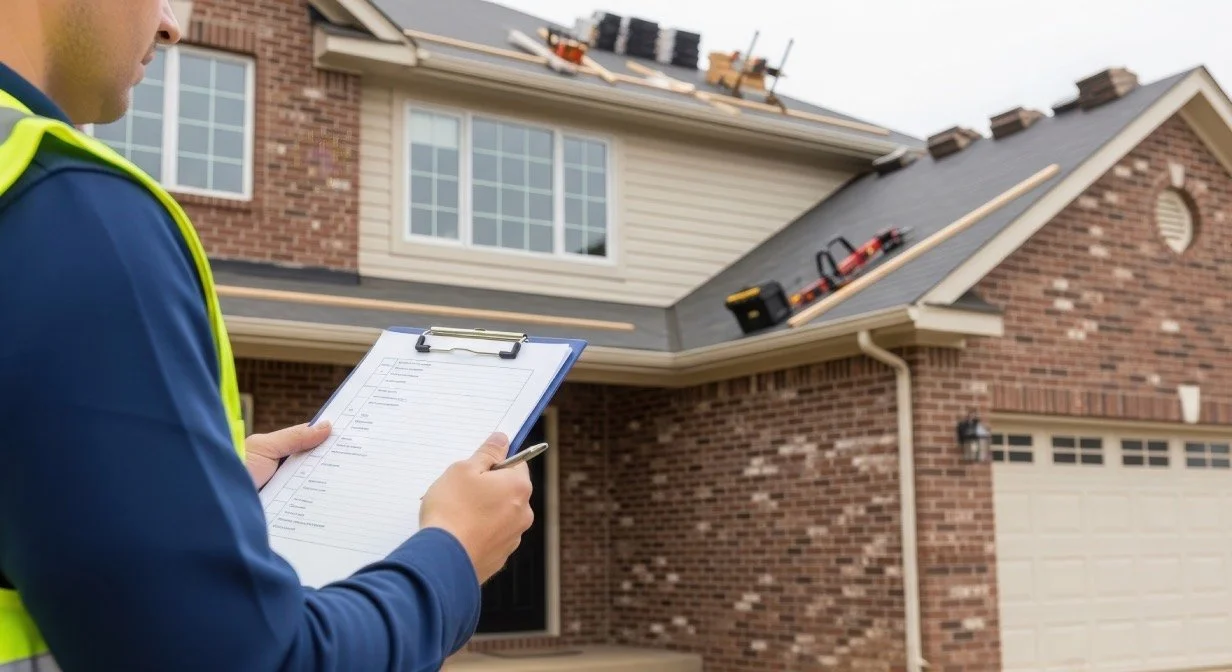
Homeowners navigating a claim benefit from maintaining a systematic checklist during the evaluation phase to keep required documentation organized:
Initial Evidence Collection:
Exact storm date and time logs matching regional weather data
Ground-level photo evidence of creased shingles, damaged flashing, and gutter granule accumulation
Interior moisture logs documenting ceiling stains or damp attic insulation
Emergency mitigation receipts for temporary protection measures
Policy & Professional Verification:
Insurance declarations page detailing specific policy coverage limits and deductibles
Comprehensive technical inspection report confirming storm-related structural loss
Detailed itemized contractor scope of work matching regional building code requirements
Formal action plan establishing construction timelines and labor specifications
Having these key items prepared before meeting with the carrier's field adjuster prevents administrative delays and guarantees that every point of structural loss receives equal consideration during evaluation.
Why Must Construction Execution Meet Rigorous Technical Standards?
Receiving carrier approval is only half the battle; executing the physical repairs correctly determines long-term protection. Substandard installation methods or inferior materials leave the home exposed to future weather events. Furthermore, non-compliant construction can jeopardize future policy coverage if a secondary claim arises down the road.
Professional execution turns approved claim payouts into lasting structural stability. Executing the work requires precise craftsmanship, premium materials, and adherence to regional building codes. Quality installation restores the protective envelope of the home, giving property owners peace of mind. Partnering with experienced tradespeople guarantees that the investment made by both the homeowner and the insurer yields maximum durability.
Why Is Professional Representation Critical During the Insurance Process?
Managing coverage adjustments independently often leaves policyholders at a distinct disadvantage. Insurance paperwork contains complex technical language, strict filing deadlines, and subtle exclusions that carriers use to reduce payout obligations. Homeowners who handle negotiations alone risk accepting partial settlements that fail to cover full restoration expenses.
Working alongside seasoned industry professionals levels the playing field. Specialized guidance in insurance claim processing removes administrative burdens from the property owner. Experts handle carrier negotiations, submit required documentation, and advocate for complete coverage on the homeowner's behalf. This dedicated assistance helps property owners receive the full financial support required to restore their home safely.
Mr. Roof & Restoration delivers the technical mastery required to safeguard properties across North Georgia by resolving coverage obstacles and stopping structural decay early. Secure full insurance approval and protect your home's long-term value today!