
How to Handle Fallen Tree or Limb Damage?
Strong storms, high winds, and saturated soil can cause trees and large branches to fall without warning. When a tree or heavy limb lands on your roof, the damage can range from a few broken shingles to significant structural issues that make your home unsafe. While the situation can feel overwhelming, taking the right steps immediately can help protect your family, minimise further damage, and simplify the repair and insurance process.
Here's what every homeowner should know if a fallen tree or limb damages their roof.
Prioritise Everyone's Safety
The first and most important step is ensuring everyone inside the home is safe. A fallen tree may have compromised the roof's structure, making certain areas unstable. If the impact caused part of the ceiling to sag, exposed electrical wiring, or major water intrusion, leave the affected area immediately.
If you suspect structural instability or notice sparks, a gas smell, or downed power lines, evacuate the home and contact emergency services or your utility provider before doing anything else.
Never attempt to climb onto a damaged roof to inspect the problem yourself. Even if the tree appears stable, the roof underneath may not be.
Assess the Damage from the Ground
Once it's safe to go outside, perform a visual inspection from the ground. Look for obvious signs of damage without getting too close to the tree or climbing onto the roof.
Common signs include:
Large branches resting on the roof
Visible holes in the roofing system
Crushed or missing shingles
Damaged gutters
Bent flashing
Roof sections that appear to sag
Broken skylights or vents
Also inspect nearby fencing, siding, windows, and vehicles, as falling trees often damage multiple parts of the property.
Document Everything
Before moving debris or arranging repairs, take clear photographs of the damage.
Capture images of:
The fallen tree or limb
All affected roof areas
Interior leaks or ceiling damage
Damaged gutters, siding, or windows
Any personal property that was impacted
The more documentation you have, the easier it will be to support your insurance claim later.
Contact Your Insurance Company
Most homeowners insurance policies cover sudden tree damage caused by storms, wind, or other covered events. Contact your insurance provider as soon as possible to report the incident.
Be prepared to provide:
The date and time of the event
Photos of the damage
A description of what happened
Information about any emergency repairs already completed
Keep copies of all invoices related to temporary protection or emergency services, as these expenses may be reimbursable under your policy.
Call a Professional Roofing Contractor
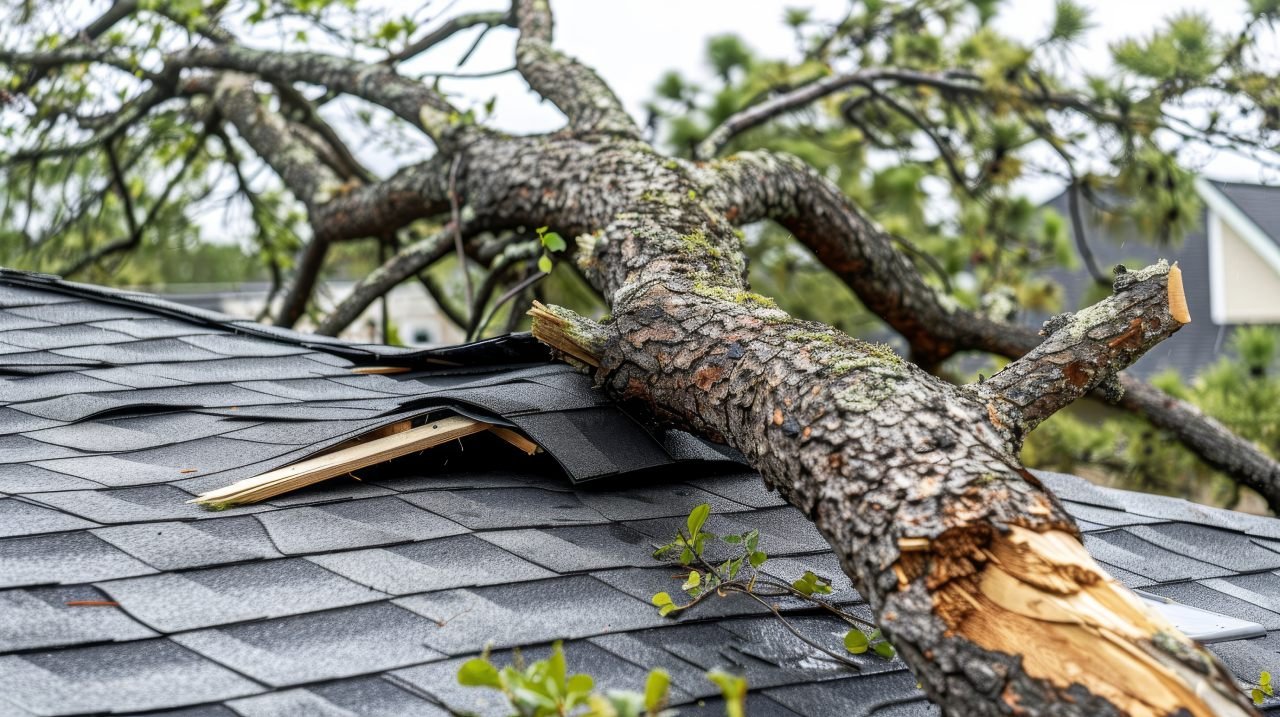
After a tree impacts your roof, it's important to have a qualified roofing contractor inspect the entire roofing system—not just the visible damage.
The impact may have affected:
Roof decking
Rafters and framing
Flashing
Underlayment
Attic insulation
Ventilation systems
Even relatively small limbs can loosen shingles or create hidden damage that eventually leads to leaks if left unrepaired.
A professional inspection provides a complete understanding of what needs to be repaired or replaced.
Arrange Safe Tree Removal
Many homeowners assume the roofing contractor should remove the tree, but tree removal should generally be handled by an experienced tree service, especially if the tree is large or unstable.
Improper removal can:
Cause additional roof damage
Create safety hazards
Shift weight unexpectedly
Damage nearby structures
The roofing contractor and tree removal company can often coordinate to ensure the tree is removed safely before roofing repairs begin.
Prevent Further Water Damage
If the roof has been punctured or exposed, temporary protection is essential until permanent repairs can be completed.
Emergency measures may include:
Installing heavy-duty roof tarps
Covering exposed decking
Removing loose debris
Redirecting water away from openings
Quick action helps minimise damage to ceilings, drywall, flooring, insulation, and personal belongings inside the home.
Don't Ignore Hidden Structural Damage
One of the biggest mistakes homeowners make is focusing only on visible roofing damage.
A significant impact can weaken structural components inside the roof that aren't immediately obvious. Without proper repairs, these hidden issues may worsen over time, leading to:
Roof sagging
Wood rot
Persistent leaks
Mould growth
Reduced structural integrity
A thorough inspection ensures every damaged component is identified before repairs begin.
Be Careful with Emergency Repair Offers
Following major storms, many homeowners receive unsolicited offers from contractors claiming they can repair the damage immediately.
Before hiring anyone:
Verify they are licensed and insured.
Ask for local references.
Obtain a written estimate.
Avoid paying the full amount upfront.
Confirm warranty details before signing a contract.
Choosing a trusted local roofing company gives you confidence that the work will be completed properly and that someone will be available if future issues arise.
Reduce the Risk of Future Tree Damage
While not every accident can be prevented, regular tree maintenance can significantly reduce the risk of future roof damage.
Consider:
Removing dead or diseased trees
Trimming limbs that hang over the roof
Inspecting mature trees after severe weather
Keeping trees healthy through regular maintenance
Having an arborist evaluate trees showing signs of decline
Preventative tree care can help protect both your roof and your property during future storms.
Restore Your Roof with Confidence
A fallen tree can be stressful, but fast, professional action makes all the difference. Mr. Roof & Restoration provides prompt roof inspections, emergency roofing services, and high-quality repairs to restore your home's safety after storm-related tree damage. Whether the impact caused a few broken shingles or major structural damage, our experienced team can assess the situation, work with your insurance company, and complete the repairs needed to protect your home for years to come.